RAZOR BRANDING BLOG

Brand Your Employees

Before you jump to conclusions, I am not referring to a cattle/fraternity kind of brand.  Although having them get a tattoo of your company logo isn't out of the question.

In service oriented companies, employees are the product.  They interact with your customers.  They represent your company.  They HAVE to understand your brand.  

Do all of the employees have the same understanding of who you are and what you do?

Do all of the employees answer the questions the same way?

The goal is to make sure everyone is on message.  Not Stepford employees, but quite simply brand advocates.  

Take a moment and think about Apple, so often the best example of how to practice best brand standards.  I have been to Apple stores in New York, California, Texas, Illinois and Louisiana and the experience was exactly the same every time.  If you have been into an Apple store then I bet you can describe the 'Apple Employee'.  

Appearance:
They are probably in their 20's or 30's.  Dressed in a variation of nice t-shirt and jeans.  Hair may be a little longer than the typical mall employee and there might be a piercing or two, but it is attractive and understated.  

Attitude:
They are helpful, but not pushy.  Every interaction while you are in the store is designed to let you experience the product.  If you have questions, they have answers.  But otherwise they let you just 'play'.

Are you sure that your customers are having that kind of experience?  Is it consistent?

Your employees are an extension of your brand.  Shop yourself.  Get someone else to shop you.  Find out for sure if they are treating everyone the way you want them to be treated.

Independent Ad Agencies Tapped in 2009

"There is no such thing as national advertising. All advertising is local and personal. It's one man or woman reading one newspaper in the kitchen or watching TV in the den." – Morris Hite

As 2009 begins, it is rapidly becoming apparent that there is a shift in the Advertising landscape. Clients are faced with much smaller marketing budgets.  Clients are preparing for a continued dip in sales. Global ad agencies are laying off large numbers of staff across the board.

All of these factors will add up to what will probably become one of the largest shifts in Advertising since the development of the computer.

Clients will begin to look beyond the large, slow, expensive agencies of yesterday and search firms will be told to procure new options for the list of consideration.

It seems that clients are starting to realize that their preconceived notions might not be accurate.  The quality of the work is not based on the size of the agency.  The strength of the message is not improved by the location of the agency.  The power of the creativity is not enhanced by the extension of the network beyond the borders of the U.S.

Clients are starting to look beyond the standard line up of agencies.  Clients are looking beyond agencies located in big expensive markets.  They will be surprised at what they find.  Great work for a good price.  Talented creative geniuses living in communities of less than 250,000 people because of the sense of community.  Account Planners that guide great strategy because they actually live next to and go to church with the people in the target audience.

It is a new day for Advertising and I think we will all be the better for it.  

The Brand of Music or Every Song Sounds The Same


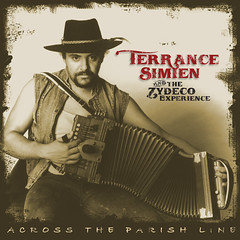
Terrance Simien CD cover art
Originally uploaded by
therussogroup

Musicians face one of the most difficult challenges that face all brands - expectations.

Loyal fans fell in love with a particular band's sound when they first heard it.  These Brand Advocates heard something that really resonated with them...spoke to them. The harmonies of The Beach Boys...the lyrics of The Rolling Stones...(I wasn't even alive in the 60's not sure why those bands are the examples that spoke to me)...something in the music just connected.

That is the most important principal of branding - creating an emotional connection with the consumer.

Bands do that every day with their music - establish a true emotional connection. And it's a powerful connection. It's a connection that goes deeper than just listening to the song on the radio or buying the CD. This brand advocacy extends to purchasing tickets to the concert, buying the merchandise, even paying to join the Fan Club. Heck, our CFO has seen Tim McGraw in concert almost 50 times. That's a brand loyalist...or stalker...you be the judge.

But what happens when an artist wants to evolve, grow, try something different? Does that box them in too much? Does it prevent artists from trying something new? The fear of running off the core audience.

I don't think so. We work with a number of musicians and it is very exciting to see how their music evolves without running off their loyal fans. Consumer brands take note - it's because they keep their brand principles intact. They aren't a race car company producing a station wagon - sorry Porsche but it's true.

Brand New Day - 7 Things to Look For In Your Brand


Originally uploaded by therussogroup

This first official business day of 2009 is truly turning out to be a brand new day.

Although most of the country is still dealing with an economic hangover, there is a lot of energy being dedicated towards a fresh start in this fresh new year.

People seem energized and enthusiastic. Clients are motivated and ready to get the year off to a great start.

I am going to be in Natchez, MS next week speaking to a group of business people about branding through social media. They are open to brand new ideas and their enthusiasm is contagious.

How does your brand feel right now?

The following are 7 Things to look for to make sure your brand is fresh this year.

1 - Have you isolated that one great factor that separates you from the pack?

2 - Has your logo been refreshed within the past five years?

3 - Is your typeface from this century?

4 - Does the name of your company still accurately represent what you do?

5 - Have you looked at the competition and checked out the rest of the industry?

6 - Do your employees serve as your biggest brand advocates?

7 - Are you branding through social media and really gathering a community of brand loyalists?

This is a brand new year for your brand. Are you ready to go to new places together?

Have Fun With Your Brand


Originally uploaded by therussogroup

Are your employees having fun?  

This picture was taken during a skit that we performed as part of the University of Louisiana at Lafayette Homecoming week (Geaux Cajuns!) Paint the Town Red competition - we won 2nd place for the 2nd year in a row, thanks for asking.

We turned our offices into a television studio circa 1968 and performed a highly modified version of The Dating Game.  It was a blast.  Even Gary, Sr. Art Director, who just dreads these things was caught with a smile on his face. He is in the bathrobe playing a 'Lebowski-ish' collegiate on the 7 year plan.

The question is, Are your employees having fun?

Not ignoring-their-responsibilities-and-goofing-off-at-work fun. More like are they having fun with their work.   Are you creating opportunities for your employees to have fun together as a team?

No matter what your industry, and no matter what their role is in the big picture, there has to be a way to find the fun in their work day.

As the Life is Good company exclaims, "Love What You Do. Do What You Love."  They manage to incorporate "doing good" as part of their work-fun and give back to the community at the same time.  I want to work there.  I love the merchandise.  I love the mind-set.  I love the brand. 

Enjoying your job and therefore enjoying your life is a critical part of job retention. Employees will stay longer if you can keep them interested.

Find the fun in your company.  It will show through in your brand and help your employees find their fun. It will go a long way toward your success.

Developing Your Brand Plan

3 Things You Should Never Do For Yourself:
  1. Cut Your Own Hair
  2. Remove Your Own Appendix
  3. Develop Your Own Brand Assessment and Plan
Even the greatest marketers can't look into their own companies, services and products and create their own brand assessments and plans.  It takes a specialist, a branding agency, to talk to employees, customers, vendors and get to the heart of the matter.

A branding agency will dig deep to uncover what you think about yourself as well as what others think of you.  

A branding agency will work with a bank and move them past their desire to stake next year's profits on advertising a CD with a rate that is 1/8% better than the bank on the next block.

A branding agency will be able to isolate the one best message that will best connect you with your customer.

It's hard to look into the mirror to cut your own hair and it's even harder to look into the mirror to learn about yourself.

Don't remove your own appendix.  Hire a specialist.  Hire a branding agency. 

Branding for the Entrepreneur

To be a successful entrepreneur in today’s world holds many challenges, which is evident by the rise a fall of businesses each day. Some explode onto the scene quickly and fade, while others thrive as they develop strong brands that stand the test of time. The ones who succeed, either by luck or by design, have come to an understanding of the importance of strong branding and have successfully implemented it into the fabric of their business plan.

Sure, there are many variables in the success or failure of a business, but more often than not, it rests in the lack of brand awareness, or more importantly, a lack of understanding and appreciation of the importance of branding. But before we even begin to discuss branding, we have to first define what it is. To start with, let’s discuss what it is not.

Marty Neumeier, author of The Brand Gap, states it best when he says, “First of all, a brand is not a logo. Second, a brand is not a corporate identity system. And finally, a brand is not a product. A brand is a person’s gut feeling about a product, service or company. It’s a gut feeling because we’re all are emotional, intuitive beings, despite our efforts to be rational.” Neumeier goes on to state. “A brand is not what you say it is, it’s what they say it is.”

Based on this definition, all businesses have a brand whether they like it or not. The problem is, few businesses take into account the depth at which their target audience connects with their brand on a daily basis. While businesses can’t control this process entirely, they can help to influence its outcome by developing branded touch points to support the brand promise at all times.

Many small businesses and start-ups feel that branding is just for products or big companies. The truth is, branding works for any industry regardless of size or location. Corporate giants such as Coke, Cisco, Nike, GE  and Disney, have each mastered the branding game by developing brand equity on a global level. This brand equity describes the value their customers place on their brand name. That value breaks down into terms that are often emotional, like, trust, reliability and security, and is true for both consumer and B2B companies.

According to Mia Pandey, a featured writer for brandchannel.com, “Branding is already gaining currency as an important issue in B2B markets and is certain to become an increasingly important factor, as industrial companies seek more ways to differentiate themselves and build a more holistic offering based on both rational and psychological motivators.”

And while millions are spent each day to deliver their message to the masses, the same branding techniques can be utilized on a local and regional level without breaking the bank to do so. A great example of this is the downtown Lafayette restaurant, Tsunami Sushi.

If you were to ask five random people in Lafayette to name the best sushi restaurant, chances are, most if not all, would say Tsunami, regardless of if they have actually been there or even like sushi. The reason for this is brand advocacy, or word of mouth advertising, which is a direct result of brand loyalty. The question is, what is it that inspired this loyalty and advocacy? Was it the food, the service, the atmosphere or something else entirely?  Chances are, it’s all of these things and more.

What Tsunami did right was establish their focus from the very beginning by defining their true point of differentiation. 

According to Michele Ezell, co-owner and founder of Tsunami, “We knew from the beginning that we wanted something different, something that at the time Lafayette did not have. We also wanted to create a place that offered more than just great food and service, but also provided an escape from the daily grind.”

Whether Ezell intended for it to be, she had just described her promise, and from this promise, her brand was officially born. 

Now, obviously there is a multitude of other elements that went into developing the Tsunami brand over time, but by establishing their focus early on, Michelle and her partners were able to base all future business decisions on the essence of the brand. Many of these decisions would lead to the development of brand touch points such as the location, the décor, the menu, the staff selection, the uniforms, the music played and even the name of the restaurant itself. By properly managing these touch points, Tsunami was able to build a road map that led its consumers toward a specific brand experience.

Please note, none of the branding elements I just mentioned for Tsunami had anything to do with a logo or advertising. This is not to say that logos and advertising aren’t important elements of branding. They are, but to start and end there would be like going on a date with the best looking guy or girl in school only to realize they had the I.Q. of a tomato and the personality of a rock.  Sure, it would be great at first, but eventually you will want more.

Businesses with well-defined brands will find that they have increased market share, preferred status with customers, increased valuations, reduced employee turnover and often a very well-defined culture with employees aligned around a common purpose.

So whether you’re an entrepreneur or a business needing a brand overhaul, take the time to ask yourself a few questions before spending money on marketing that may or may not work.  A few of these are: what emotions does my company evoke? What differences may we authentically claim? And most importantly, why should we (the public) even care? Once you have the answers to these, you will be ready to build a brand that has focus, harmony and connection within any category and in any market.


Michael Russo

Creative Director

The Russo Group